THE TBM IN FIGURES
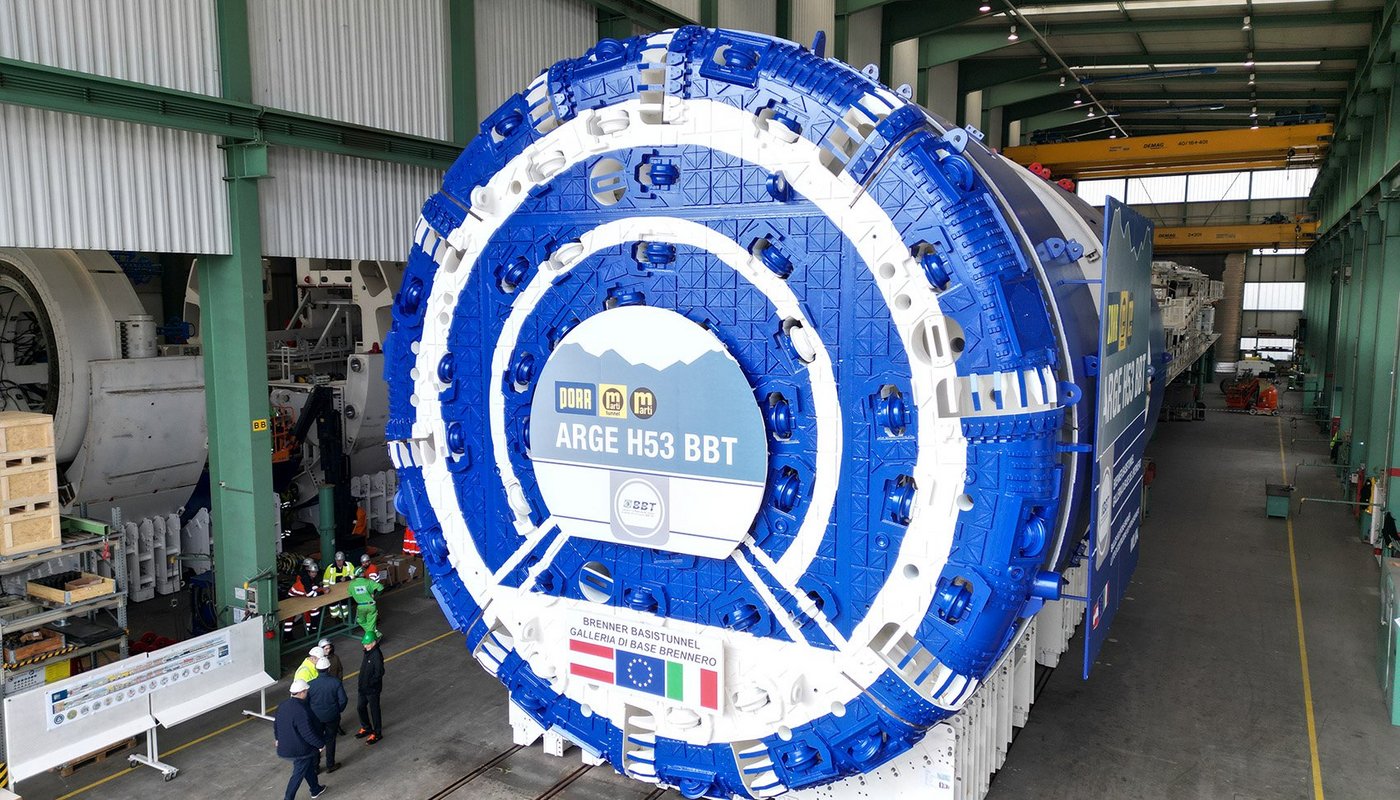
Cutter head diametre
TBM total length
Driving power (6.186 PS)
TBM total weight
installed by TBM Wilma to form the inner lining
BREAK IN THE WEST MAIN TUNNEL
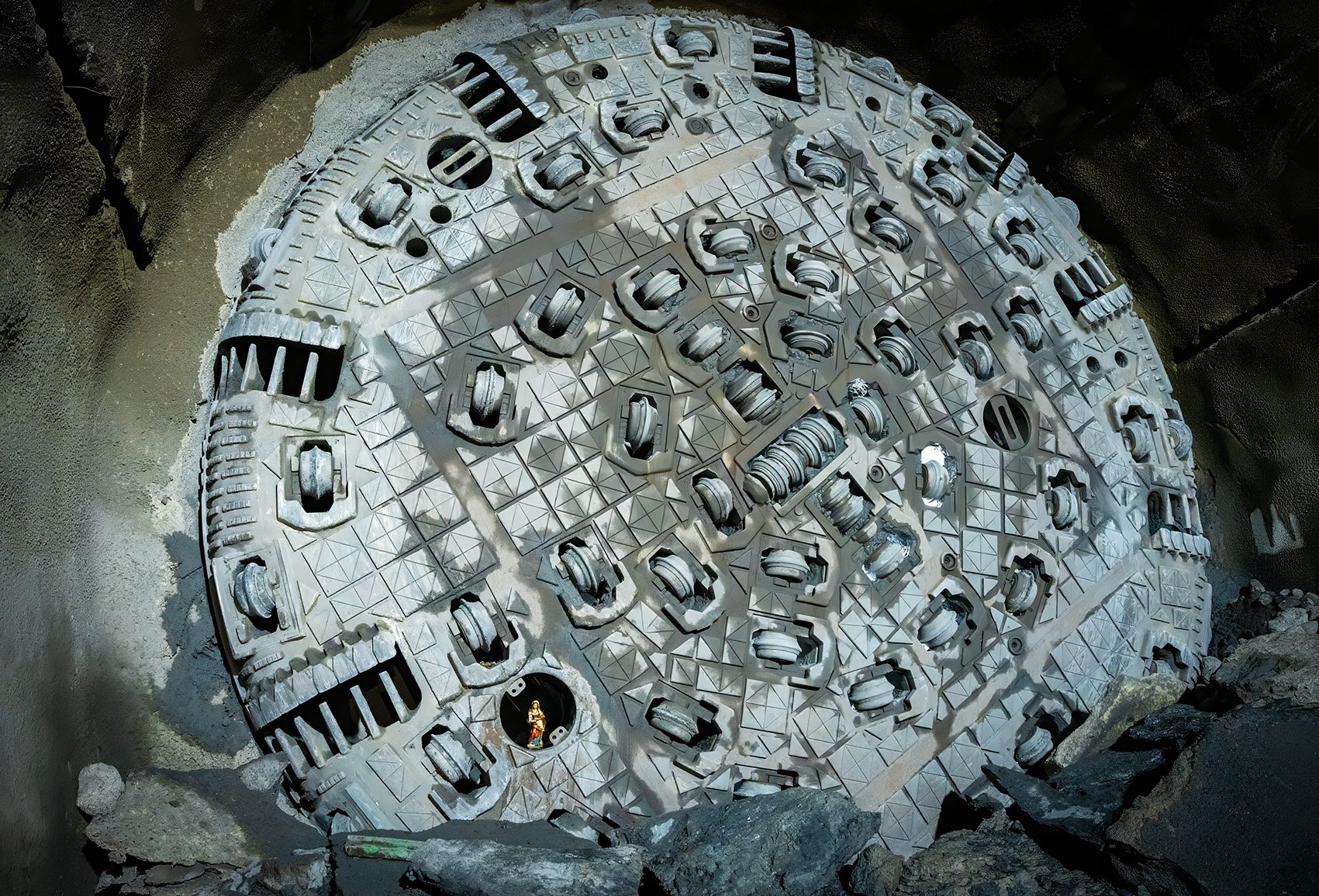
Approaching from the south, TBM Wilma has been working its way northwards through the final rock formations.
The breakthrough took place at the IRIS auxiliary drivage in the municipality of Navis.
This not only established the connection between the Sill Gorge–Pfons and Pfons–Brenner construction lots but also linked all sections of the western main tunnel into one continuous tunnel tube, stretching approximately 55 kilometres from the Sill Gorge near Innsbruck to Fortezza in Alto Adige.
GEOLOGY
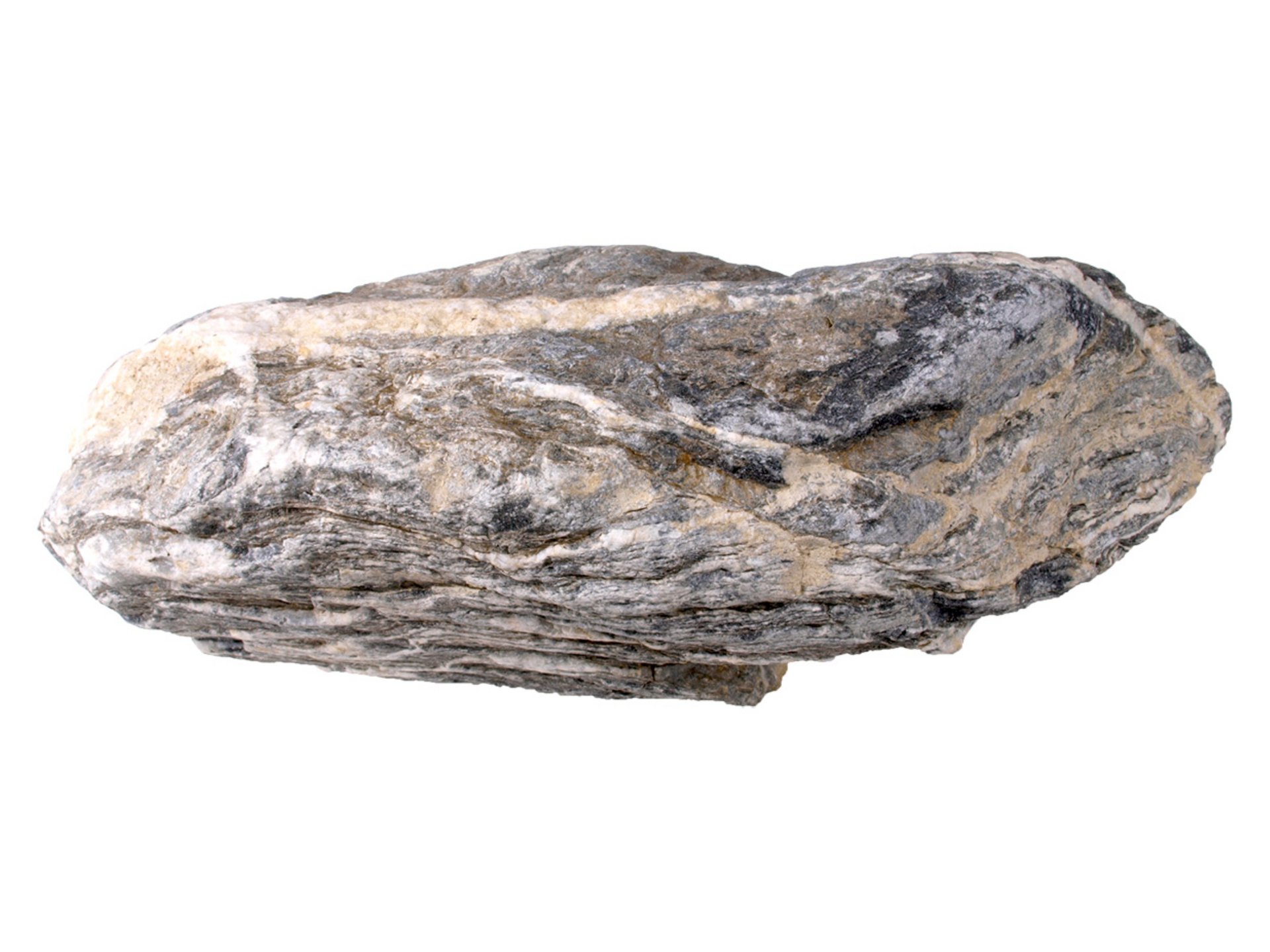
Bündner schists: Heavily schistose, these rocks are mainly made up of quartz, mica and calcite. The source material was deposited on the ocean floor during the Mesozoic era. During the formation of the Alps, these rocks were transformed into schist. The Mesozoic Era (also known as the “Reptilian Age”) is a geological era that began approximately 252 million years ago and ended around 66 million years ago. Mountain building, or orogeny, refers to the formation of mountain ranges through the deformation of rock masses over geological timescales.
DISMANTLING
The auxiliary drivage in the “IRIS” fault zone served two important purposes: It served both as the breakthrough point at the end of the excavation drives of TBMs Wilma, Olga, Ida and Lilia, and as a disassembly chamber where the four machines were disassembled and prepared for removal from the site

DISTINCTIVE FEATURES OF TBM WILMA
The challenge of geological fault zones
In underground fault zones, the rock mass is not as compact and there can be significant changes in its characteristics over very short distances. On its northward journey through the calcareous schists and calcareous phyllites of the Bündner schist complex, TBM Wilma had to excavate through several such fault zones.
These are fracture zones along which blocks of rock in the Earth’s crust have shifted relative to one another. The originally solid rock was fractured and crushed, resulting in loose and unstable ground.
HOW TBM WILMA GOT ITS NAME
The naming competition was organised in collaboration with RegionalMedien Austria AG.The brief was to find a female first name beginning with the same letter as the respective main tunnel: “W” for the western main tunnel and “O” for the eastern main tunnel. (‘O’ stands for Ost, the German word for ‘east’)
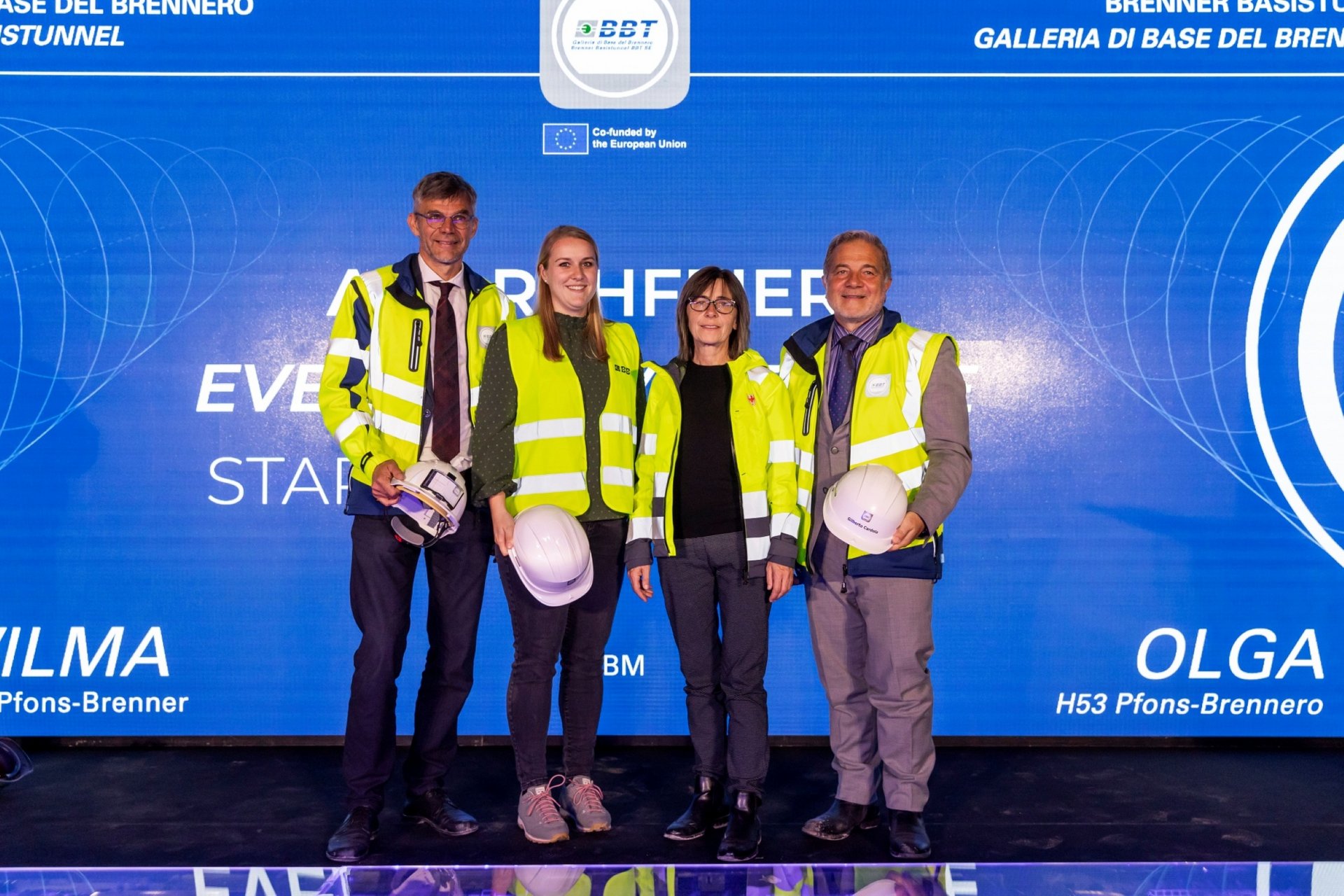
From the many entries submitted, the winning suggestion came from Ms Helga Morandell from Kaltern, a reader of MeinBezirk.
She proposed the name Wilma for the TBM that would excavate the BBT’s western main tunnel – a truly fitting name. Wilma is the feminine form of Wilhelm. The name Wilhelm derives from the Old High German elements willio (will) and helm (protection).