
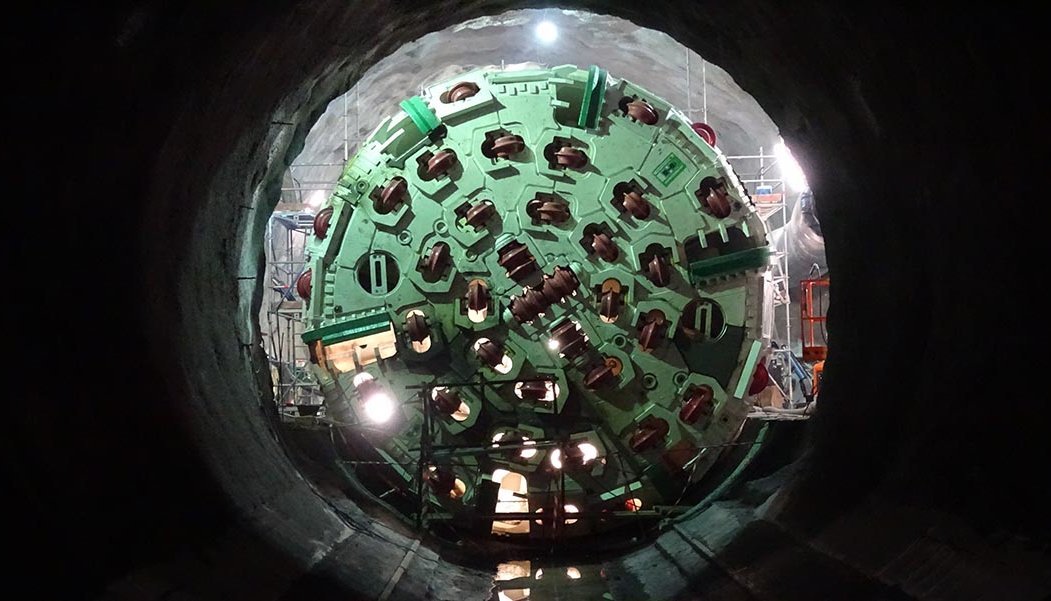
THE TBM IN FIGURES
Cutter head diametre
Cutter head diametre
Driving power (3.807 PS)
TBM total weight
installed by TBM Serena to form the inner lining
ARRIVAL OF TBM SERENA AT THE BRENNER PASS
Serena’s arrival at the Brenner Pass on 24 November 2021 marked a milestone in the history of the BBT project. For the first time, the Brenner Base Tunnel excavation works had reached the border between Austria and Italy.
After covering a distance of more than 14 kilometres, the double-shield TBM became the first tunnel boring machine to achieve this feat.
A small ceremony was held to mark this significant milestone, attended by political representatives and project stakeholders. The strict COVID-19 health and safety measures in force at the time were rigorously observed.
On 18 September 2025, the exploratory tunnel finally reached the Brenner from the Austrian side as well. With the completion of the excavation works on the H53 Pfons–Brenner lot, advancing southwards, the first continuous cross-border connection between Austria and Italy was established.

GEOLOGY
Old Crystalline formations: This strongly foliated, fine-grained rock consists predominantly of quartz, mica and feldspar. It formed from fine-grained marine sediments of Palaeozoic age, which were transformed into mica schist and paragneiss during the formation of the Alps.
The Palaeozoic (also known as the Paleozoic Era or the “Age of Ancient Life”) spans the geological period from approximately 538.8 to around 251.9 million years ago.
Mountain building, or orogeny, refers to the formation of mountain ranges through the deformation of rock masses over geological timescales.

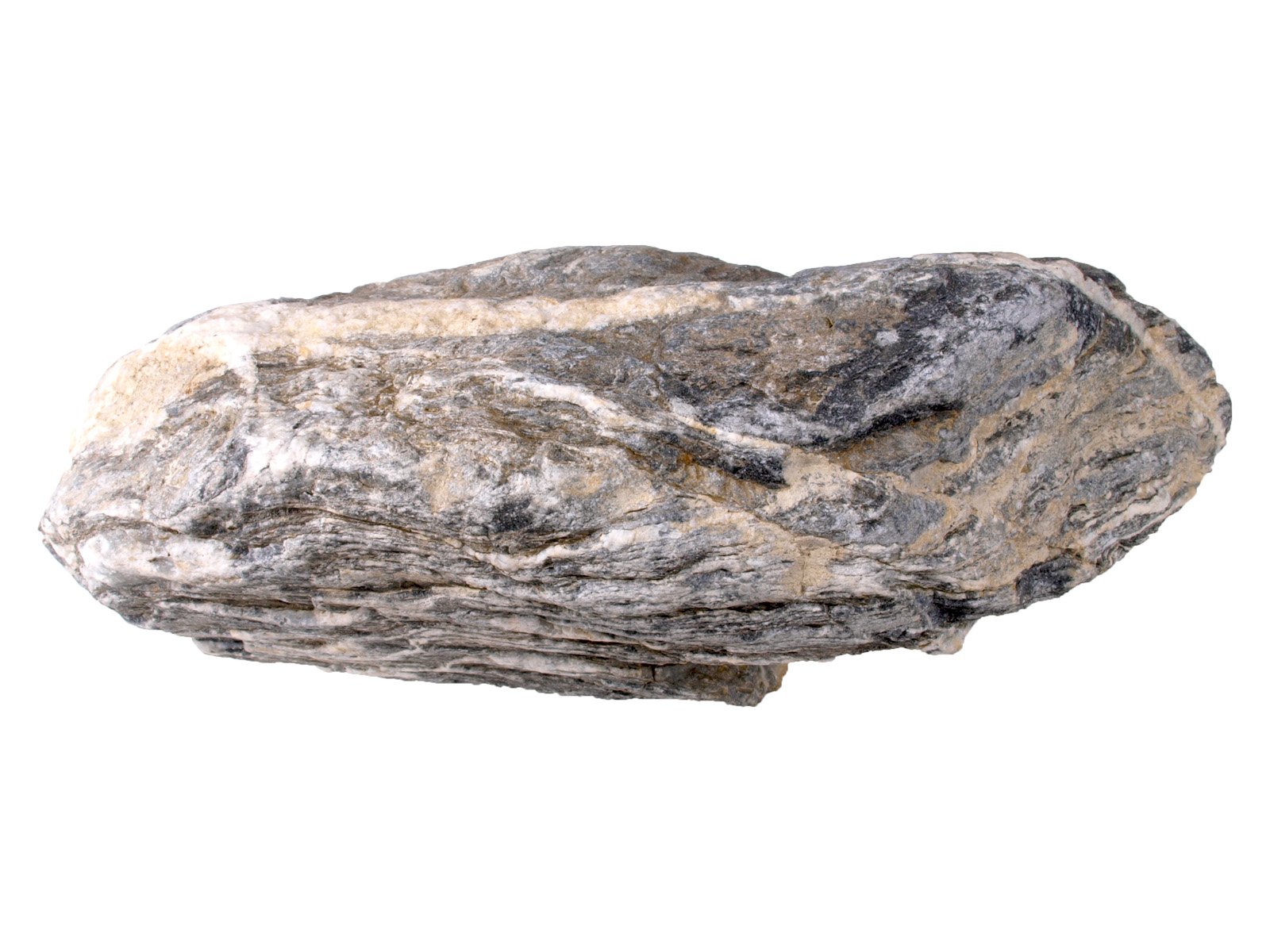
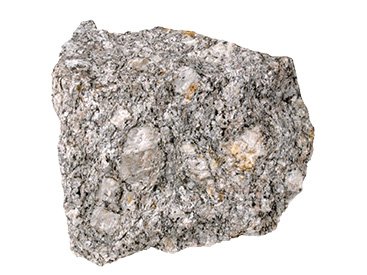
Bündner schists: This strongly foliated, medium- to fine-grained rock consists predominantly of carbonate, quartz and mica. It formed from marine sediments of the Mesozoic Era and was transformed into calcareous schist and, to a lesser extent, calcareous marble during the formation of the Alps. The Mesozoic Era (also known as the “Reptilian Age”) is a geological era that began approximately 252 million years ago and ended around 66 million years ago.
Central gneiss: This slightly foliated rock consists mainly of quartz, feldspar and mica. It formed from intrusive igneous rock (granite or granodiorite) and was transformed mainly into orthogneiss during the formation of the Alps. In geology, “intrusive” refers to rocks or geological structures formed by the intrusion of magma into pre-existing rock.
DISMANTLING
After overcoming some of the hardest and most abrasive rock formations in the entire Alpine region, TBM Serena was dismantled directly on the construction site from 2022 onwards.
In geology, the term “abrasive” refers to a material or process that has a grinding, rubbing or wearing effect on rocks and minerals.

DISTINCTIVE FEATURES OF TBM SERENA
Serena was one of the three tunnel boring machines, alongside Clio and Günther, used to drive the BBT exploratory tunnel. Together, the three TBMs excavated approximately 42 kilometres of tunnel. The remaining kilometres were excavated using conventional tunnelling methods.
The exploratory tunnel has a total length of 57.5 kilometres, of which 27.2 kilometres are located in Italy and 30.3 kilometres in Austria.
The BBT’s third tunnel tube
A distinctive feature of the Brenner Base Tunnel is the third tunnel running centrally between the two railway tunnels: the exploratory tunnel.
During the construction phase, it provided valuable information on geological conditions and the rock mass to be excavated, in preparation for the excavation of the two main tunnels.
From exploratory tunnel to service tunnel
Originally constructed as an exploratory tunnel, it will serve as a service tunnel once the Brenner Base Tunnel becomes operational. This offers numerous advantages: a large number of technical installations will be housed in the service tunnel, where they will be less exposed to external influences such as dust. In addition, maintenance work can be carried out directly via the service tunnel. This means that the railway tunnels do not need to be closed and train services can continue. This reduces operational disruptions and significantly increases the availability and safety of the entire tunnel system.
A double challenge
For Serena, the challenge was not only to drive the exploratory tunnel through extremely difficult fault zones. During the drive, more than 75,000 tubbing segments were also installed.
The tubbing segments were manufactured at the Hinterrigger plant near the Mules construction site, which operated from 2017 to 2024 to produce the BBT tunnel lining segments. From there, the precast concrete elements were transported by rail directly to Serena.