RUNNING THROUGH THE MOUNTAIN RATHER THAN OVER IT
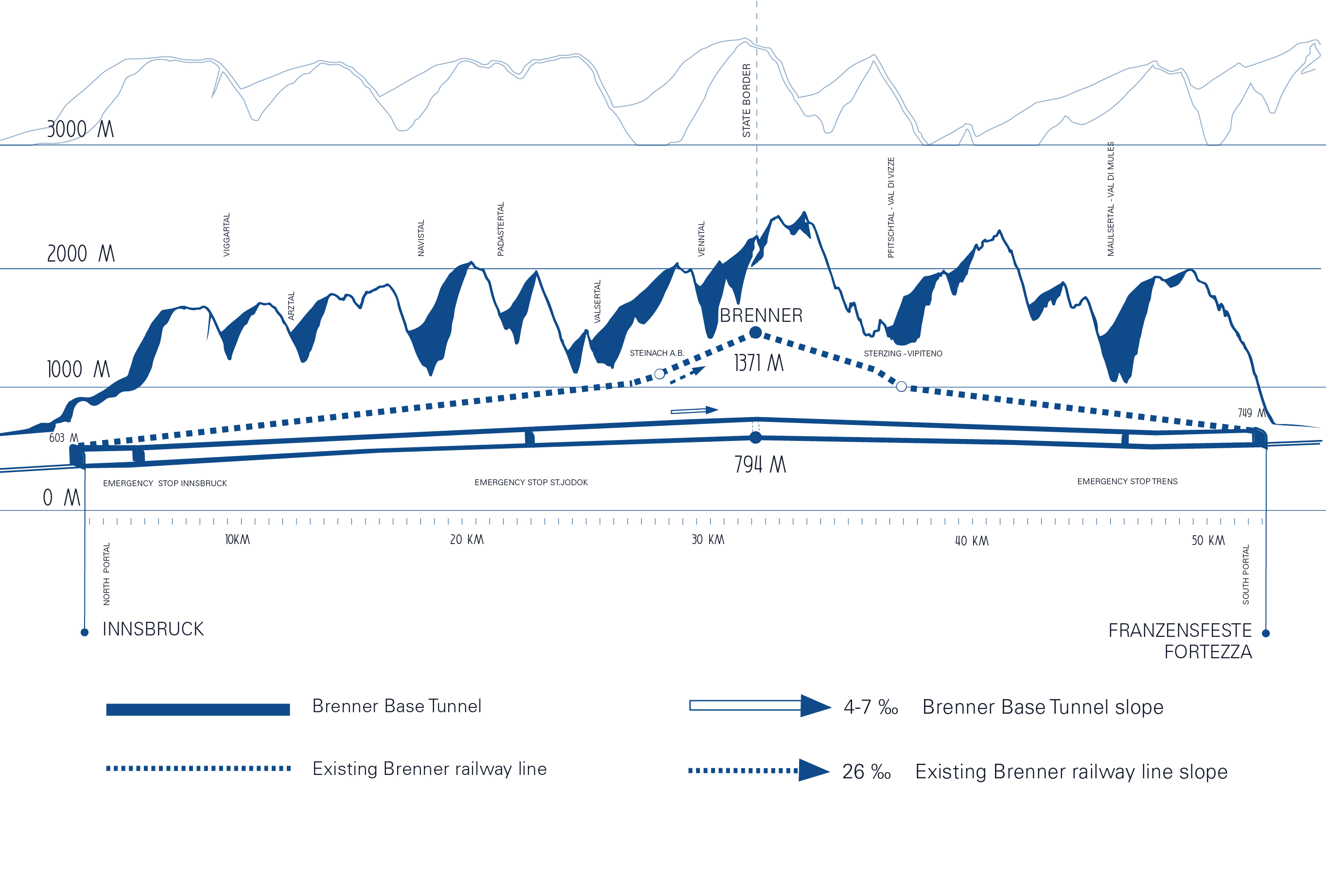
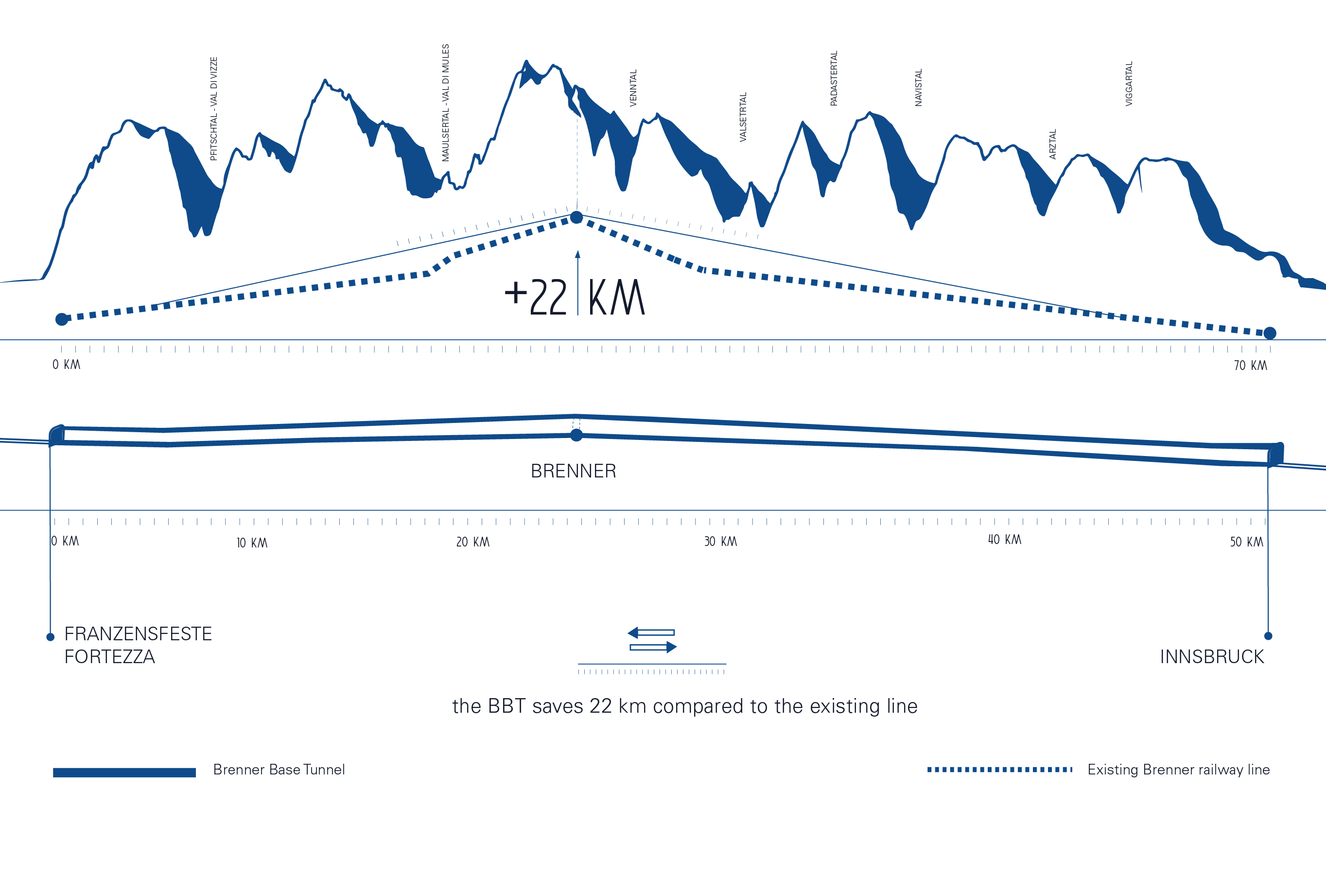
With a maximum gradient of 4–7 ‰, the route through the Brenner Base Tunnel runs almost flat and virtually straight beneath the national border. It therefore meets the standards of a modern high-speed line for passenger and freight transport. Together with the access lines from Munich in the north and Verona in the south, it will set the course for the future of European rail transport. The BBT not only brings countries and regions closer together, but also creates numerous economic, social, environmental and transport-related benefits.
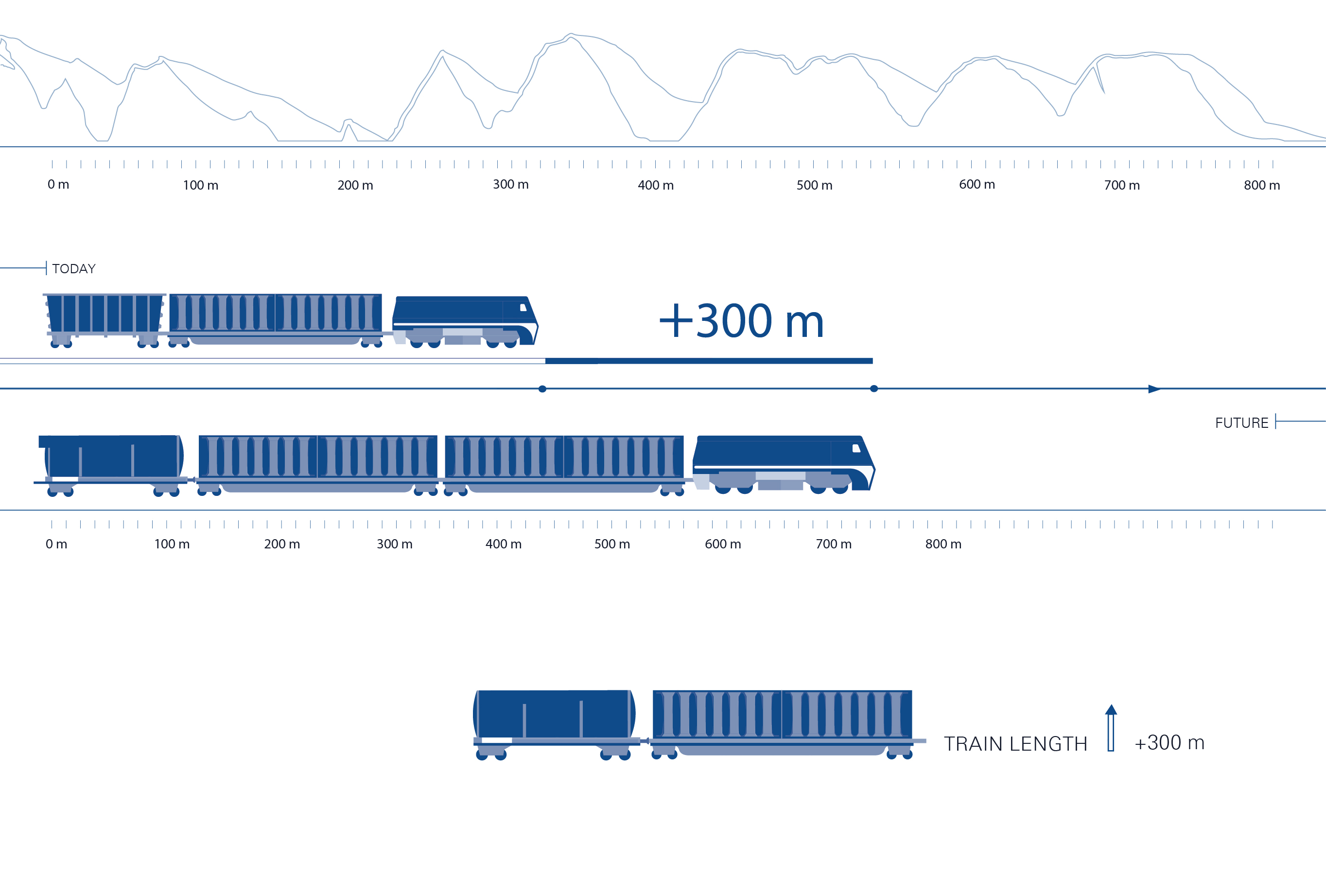
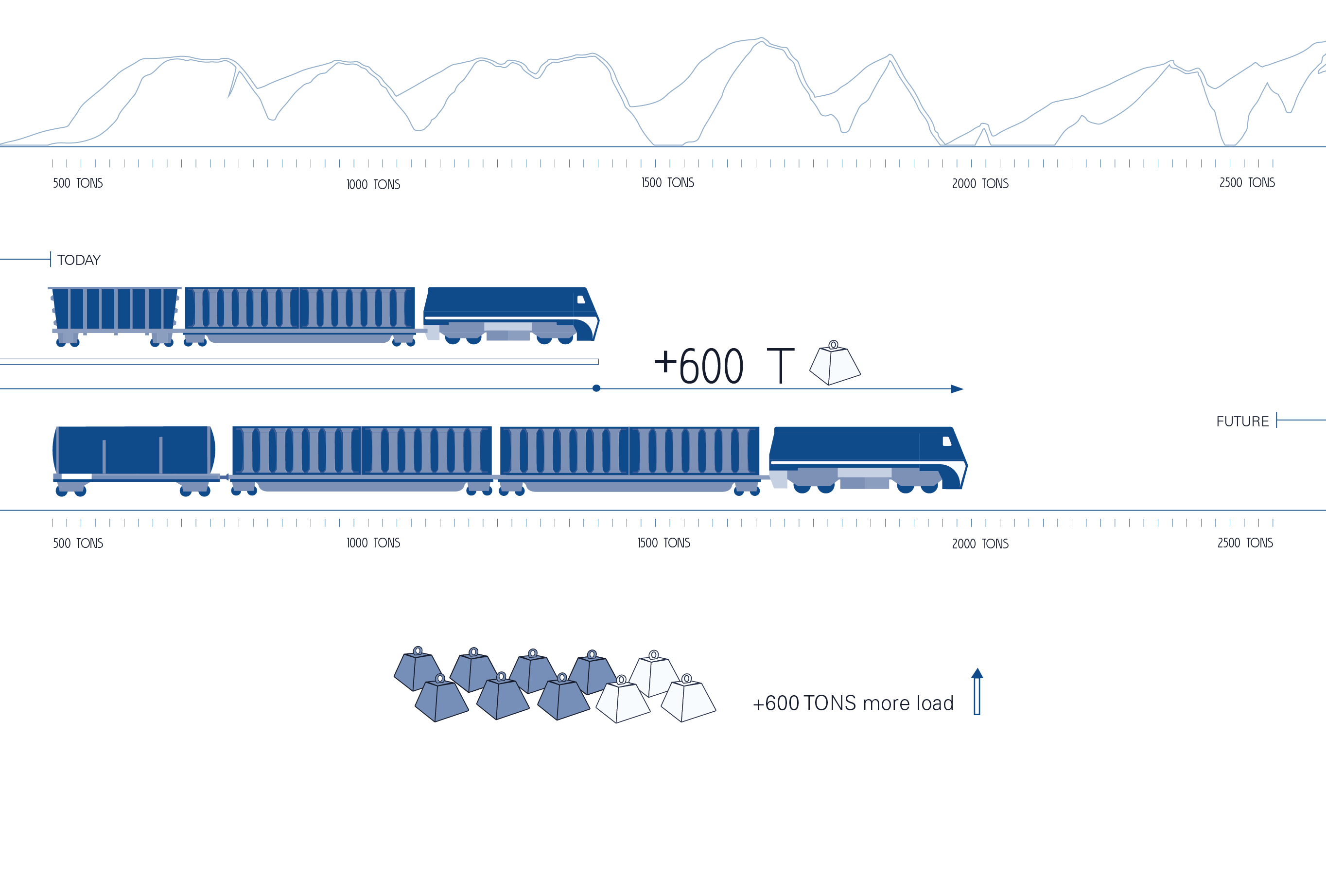
The new route as a flat railway will offer significant economic benefits: The significant reduction in gradients and inclines will lead to a noticeable drop in energy consumption, enabling trains to operate more efficiently. At the same time, a single locomotive will suffice in future, further reducing operational costs. Furthermore, both passenger and freight transport will benefit from significantly shorter journey times, which enhances the attractiveness and performance of the entire connection.
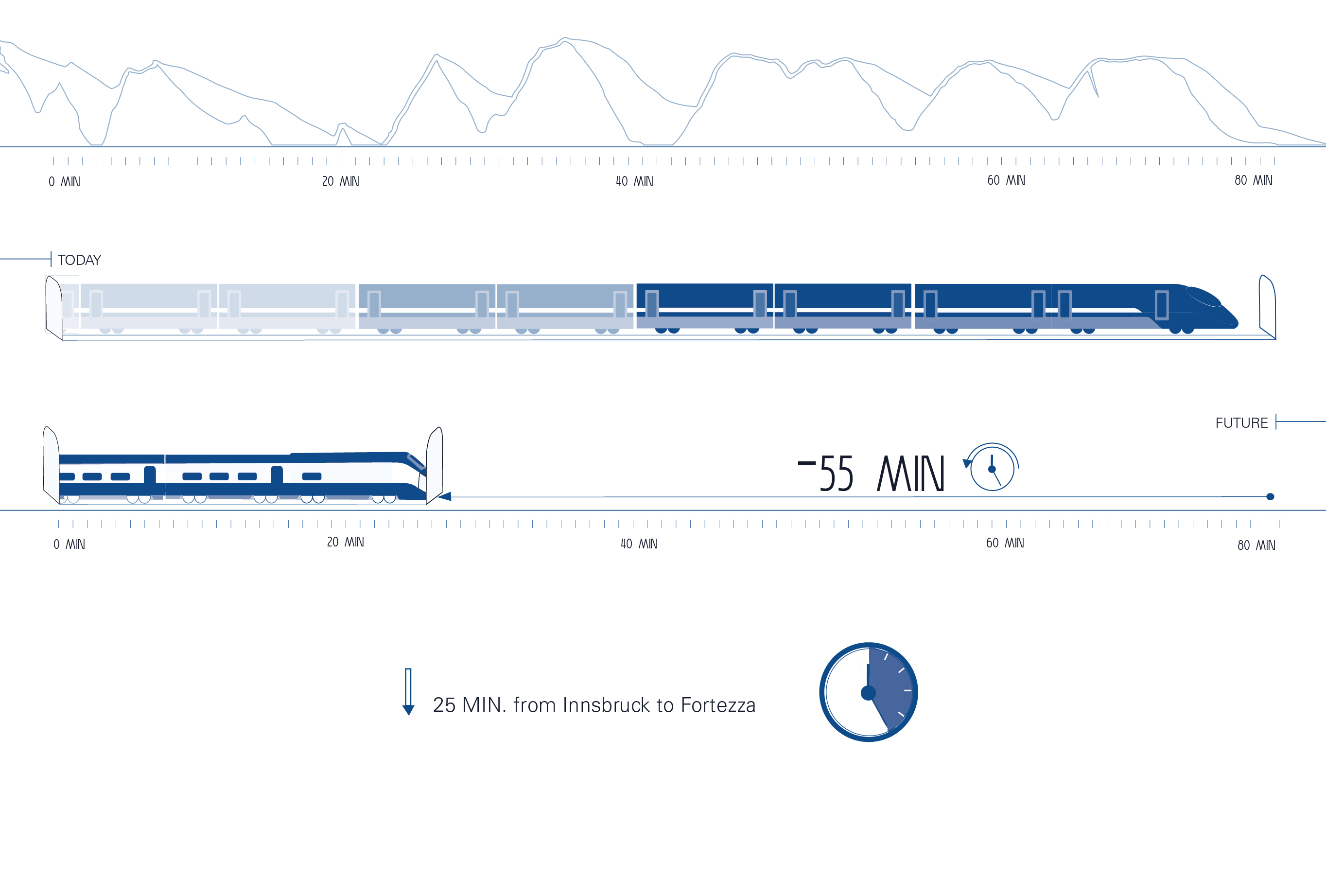
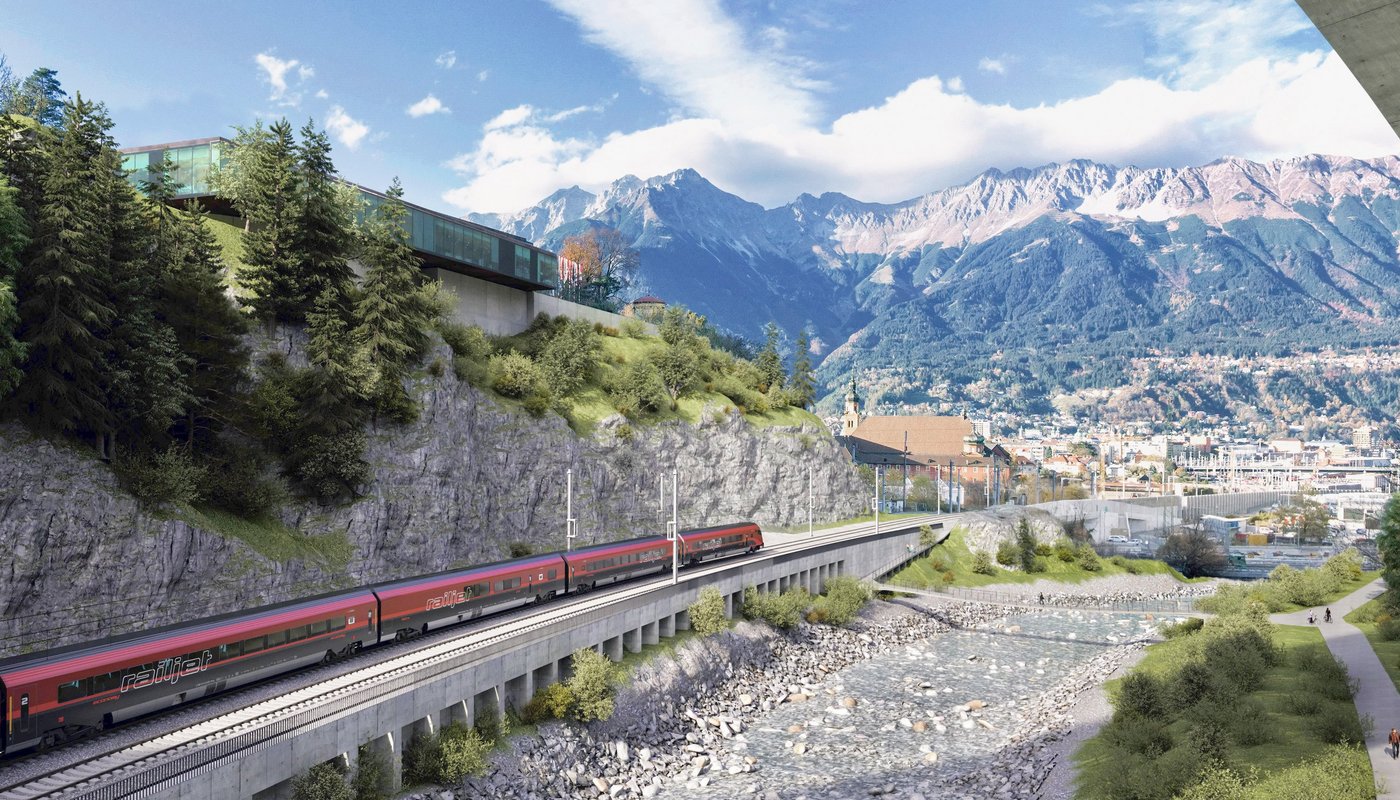
The reduced travel time for passenger transport – from 80 to just 25 minutes – will bring significant social benefits. It will expand the areas where people can work and live, facilitate access to educational and cultural opportunities, and promote social interaction. At the same time, improved accessibility will help these regions to grow ever closer together and create new opportunities for cooperation and development.
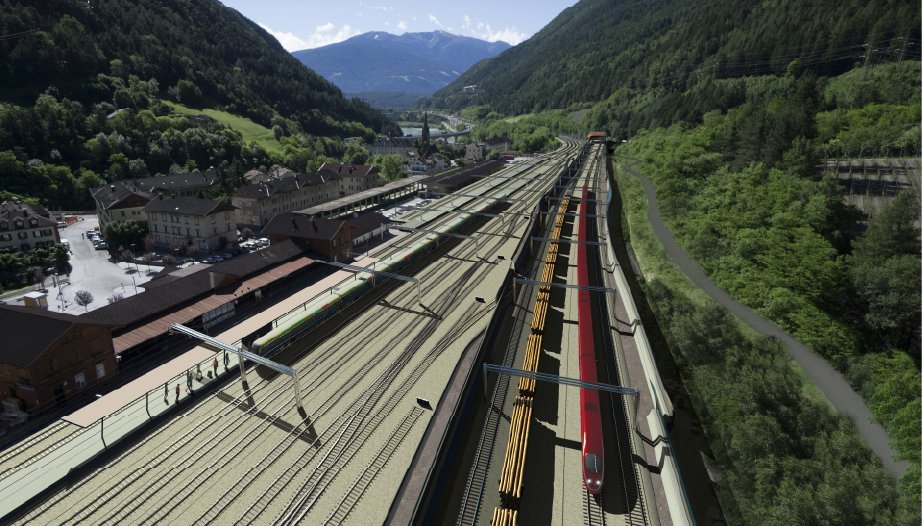
The shift of a large proportion of freight transport from road to rail thanks to the BBT will bring clear environmental benefits: There will be a significant reduction in harmful emissions, noise pollution, and the environmental impact of traffic jams and accidents. Overall, this will contribute to more sustainable and environmentally friendly mobility.
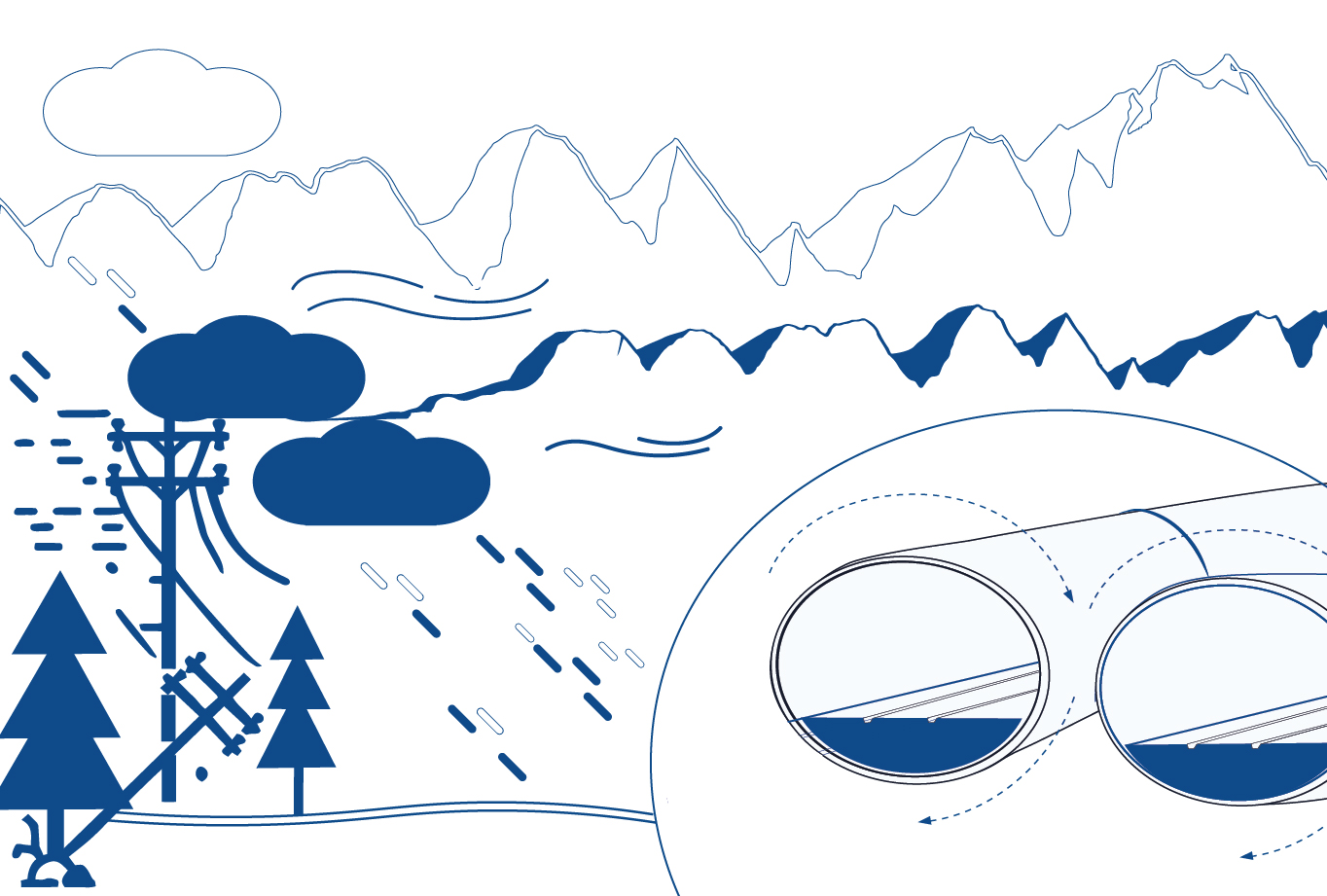
The tunnel offers clear operational and logistical advantages: As a weather-independent infrastructure providing constant conditions underground, it ensures reliability in operations. The technical equipment for railway operations is largely housed outside the two railway tubes. As a result, the tunnels will remain open almost non-stop for operations, and closures for necessary maintenance work – both planned and unplanned – can be significantly reduced.