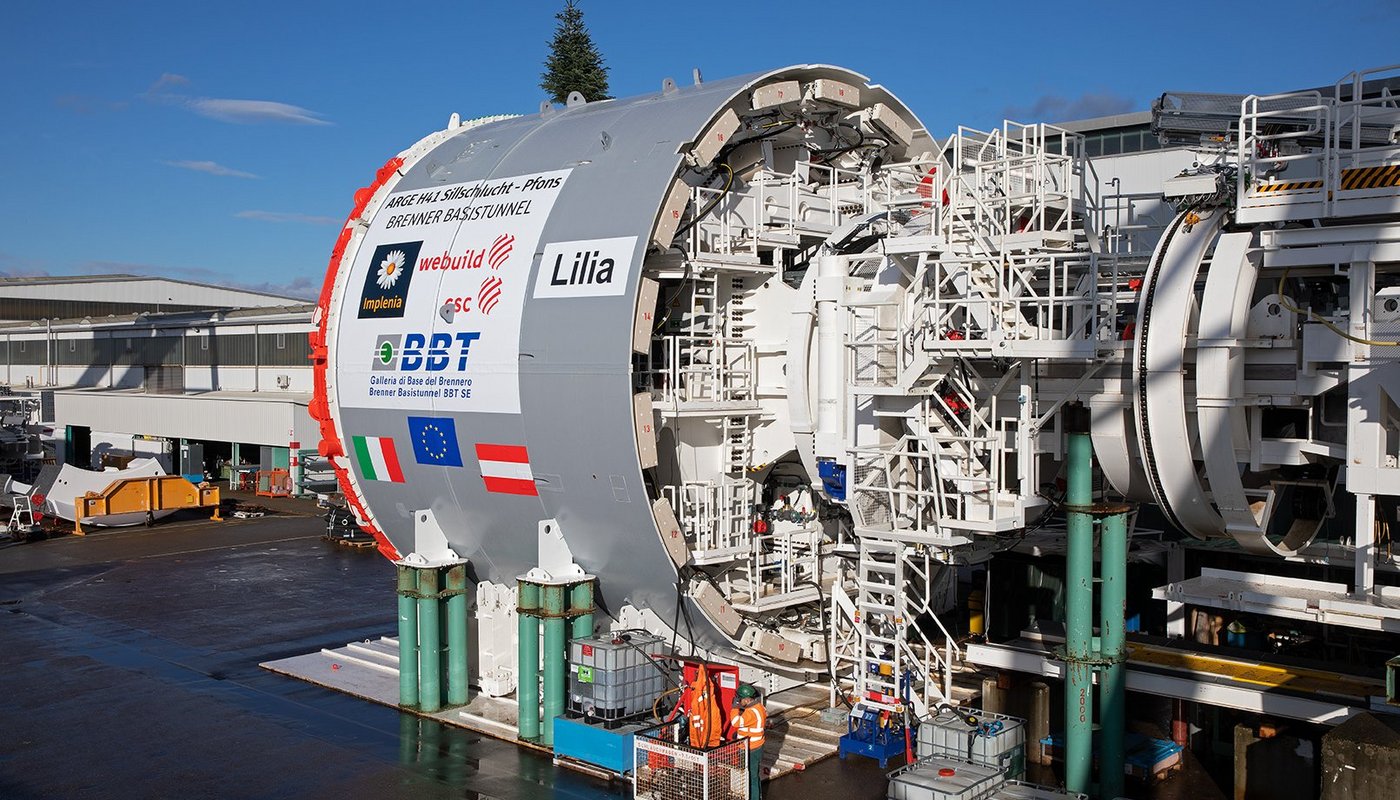
THE TBM IN FIGURES
Cutter head diametre
TBM total length
Driving power (6.188 PS)
TBM total weight
installed by TBM Lilia to form the inner lining
BREAKTHROUGH IN THE EAST MAIN TUNNEL
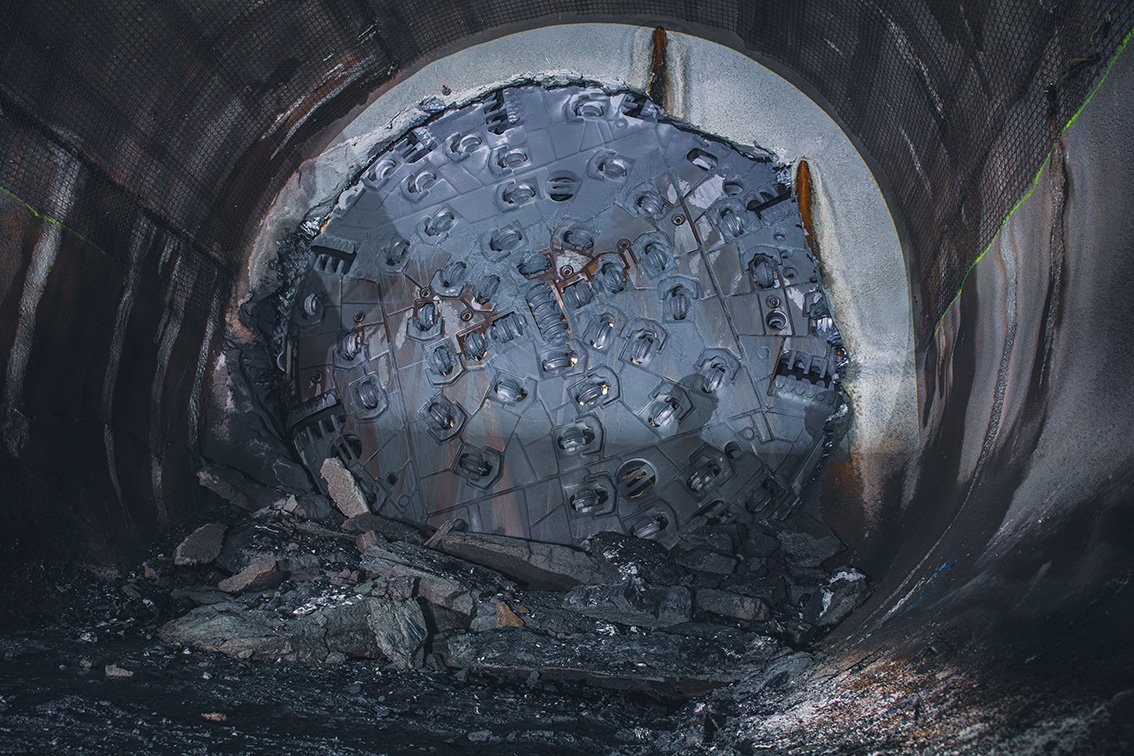
After approximately 29 months of tunnelling, the job was done: Lilia broke through the final metres of rock.
As with her twin sister Ida, Lilia’s breakthrough deviation was just 3 millimetres in width and 18 millimetres in height.
Like Ida just a few weeks earlier, Lilia also completed her drive by breaking through into the “IRIS” auxiliary drivage, which connects the H41 Sill Gorge–Pfons and H53 Pfons–Brenner construction lots. In modern tunnel construction, auxiliary drivages are an important complementary measure for ensuring the safe excavation of the main tunnel.
During its journey beneath the main Alpine ridge, Lilia had to negotiate several challenging geological zones. Just like her twin sister Ida, she successfully overcame these challenges and safely made her way through the mountain.
GEOLOGY
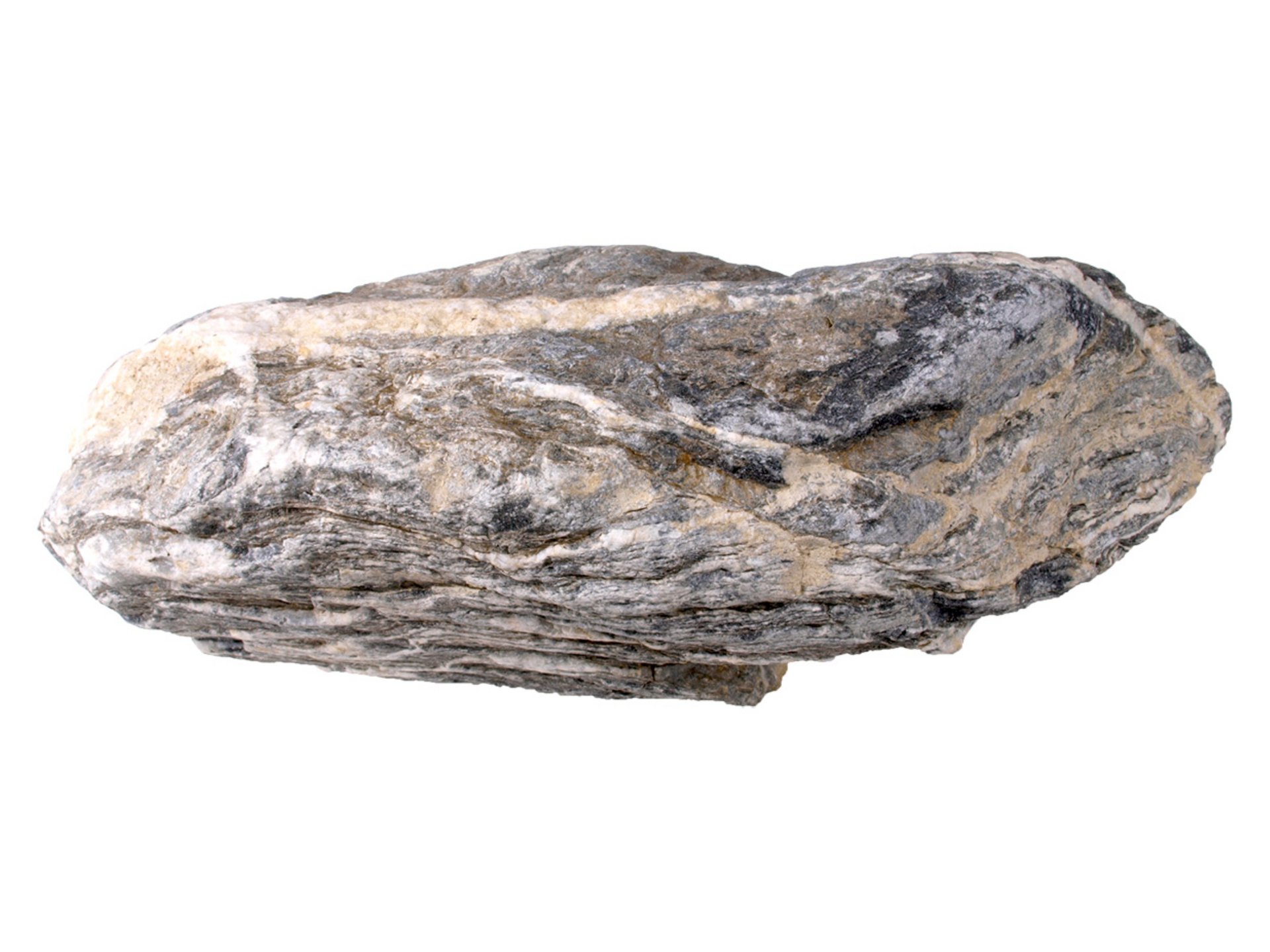
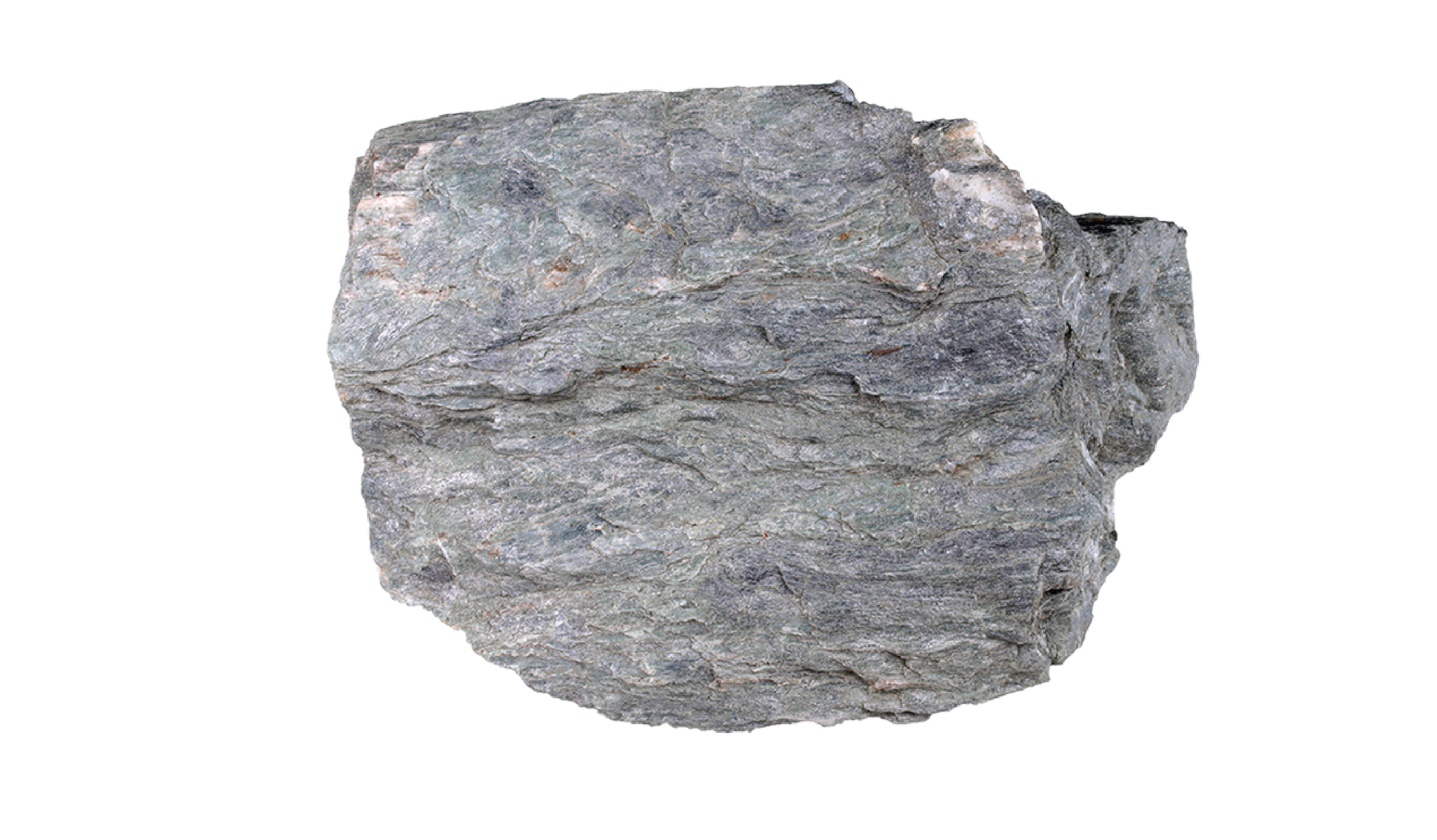
Bündner schists: Heavily schistose, these rocks are mainly made up of quartz, mica and calcite. The source material was deposited on the ocean floor during the Mesozoic era. During the formation of the Alps, these rocks were transformed into schist. The Mesozoic Era (also known as the “Reptilian Age”) is a geological era that began approximately 252 million years ago and ended around 66 million years ago. Mountain building, or orogeny, refers to the formation of mountain ranges through the deformation of rock masses over geological timescales.
Quarzphyllite: A fine-grained, strongly foliated rock consisting mainly of quartz and mica. The original rocks were deposited during the Palaeozoic Era and were later transformed into phyllites under increased pressure and temperature during subsequent mountain-building processes. The Palaeozoic (also known as the Paleozoic Era or the “Age of Ancient Life”) spans the geological period from approximately 538.8 to around 251.9 million years ago.
DEMONTAGE
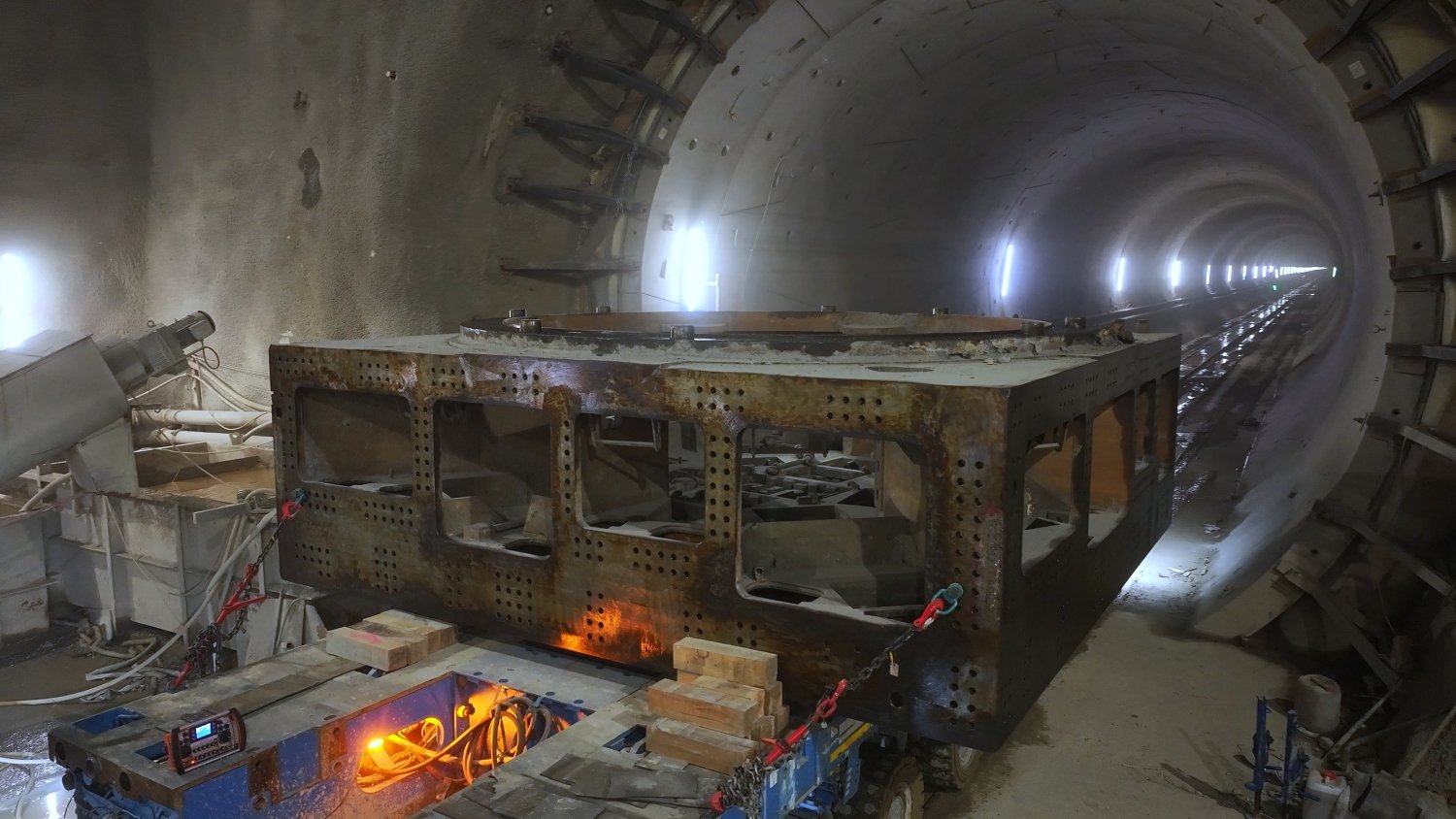
The auxiliary drivage in the “IRIS” fault zone served two important purposes: It served both as the breakthrough point at the end of the excavation drives of TBMs Wilma, Olga, Ida and Lilia, and as a disassembly chamber where the four machines were disassembled and prepared for removal from the site.
DISTINCTIVE FEATURES OF TBM LILIA
Unscheduled Halt
In mid-June 2024, Lilia unexpectedly came to a standstill. Loose, unstable rock had been encountered at the cutterhead. Before tunnelling could resume, the area first had to be secured and stabilised using technical measures.
Lilia remained in position for three weeks.
For the crew, an intensive period began: Together with geologists, geotechnical engineers, tunnelling specialists and experts from the construction company, the situation was analysed and the next steps agreed upon – both in the offices above ground and directly at Lilia's location in the tunnel.
Thanks to the team's tremendous efforts, the fault zone was eventually navigated safely. Lilia was then able to resume tunnelling without damage and continue her journey through the mountain.
HOW LILIA GOT ITS NAME
As part of the school competition “A name for the TBM”, the children of the Wipptal primary school in St. Peter/Ellbögen chose the name “Lilia” for one of the two tunnel boring machines (TBM) in the “Sill Gorge-Pfons” construction lot in a democratic vote in June 2022.
The name “Lilia” derives from the Latin word “lilium”, meaning lily – a symbol of purity. A purity that evokes the clean air of the Alpine valleys – something we aim to preserve for future generations through the Brenner Base Tunnel.
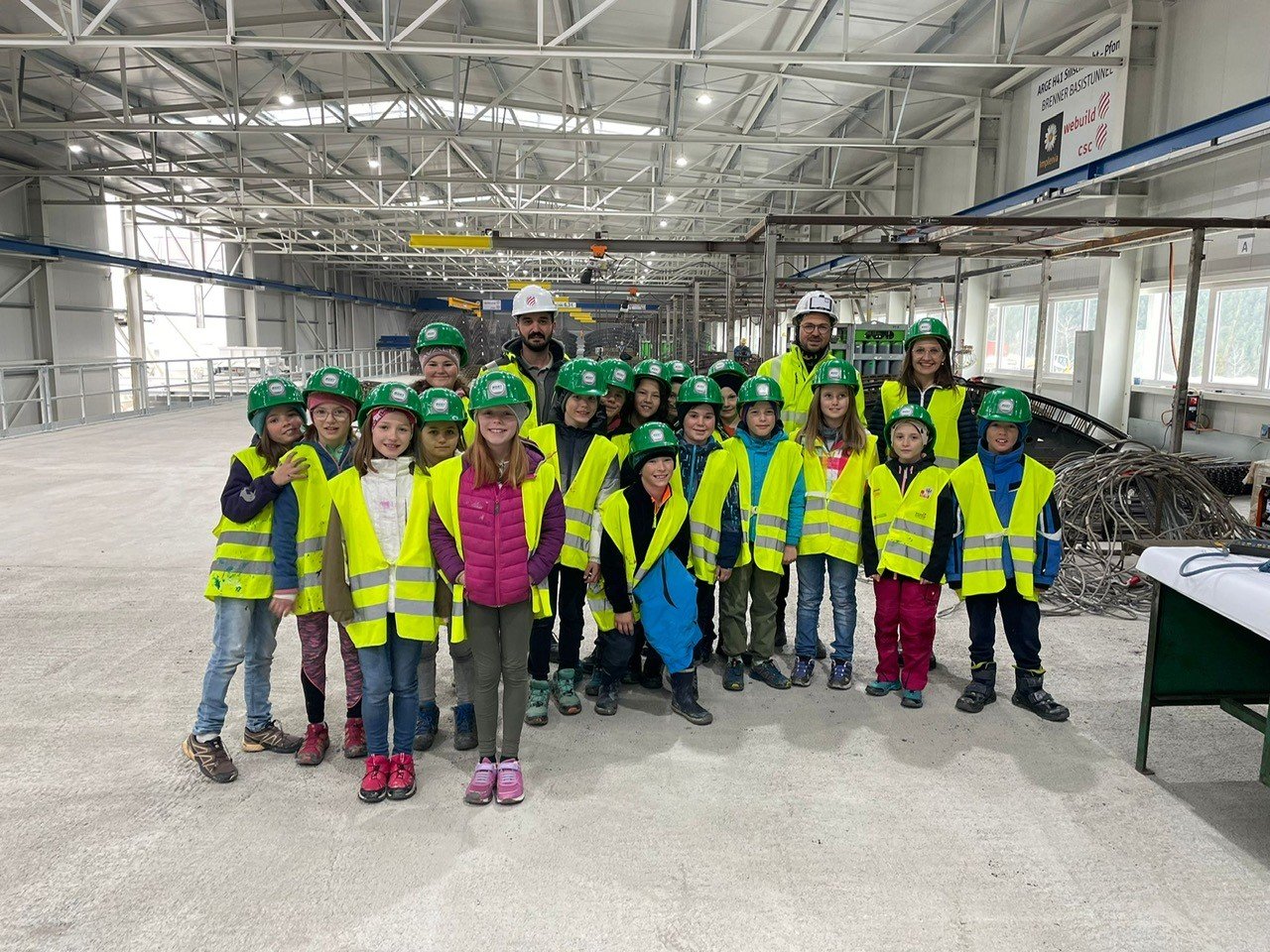
During a visit to the construction site, Lilia’s godparents were not only allowed to colourfully paint a tubbing ring for Lilia, but also to visit the tubbing ring factory located directly on the construction site. They were able to see how such a precast concrete element is produced.