
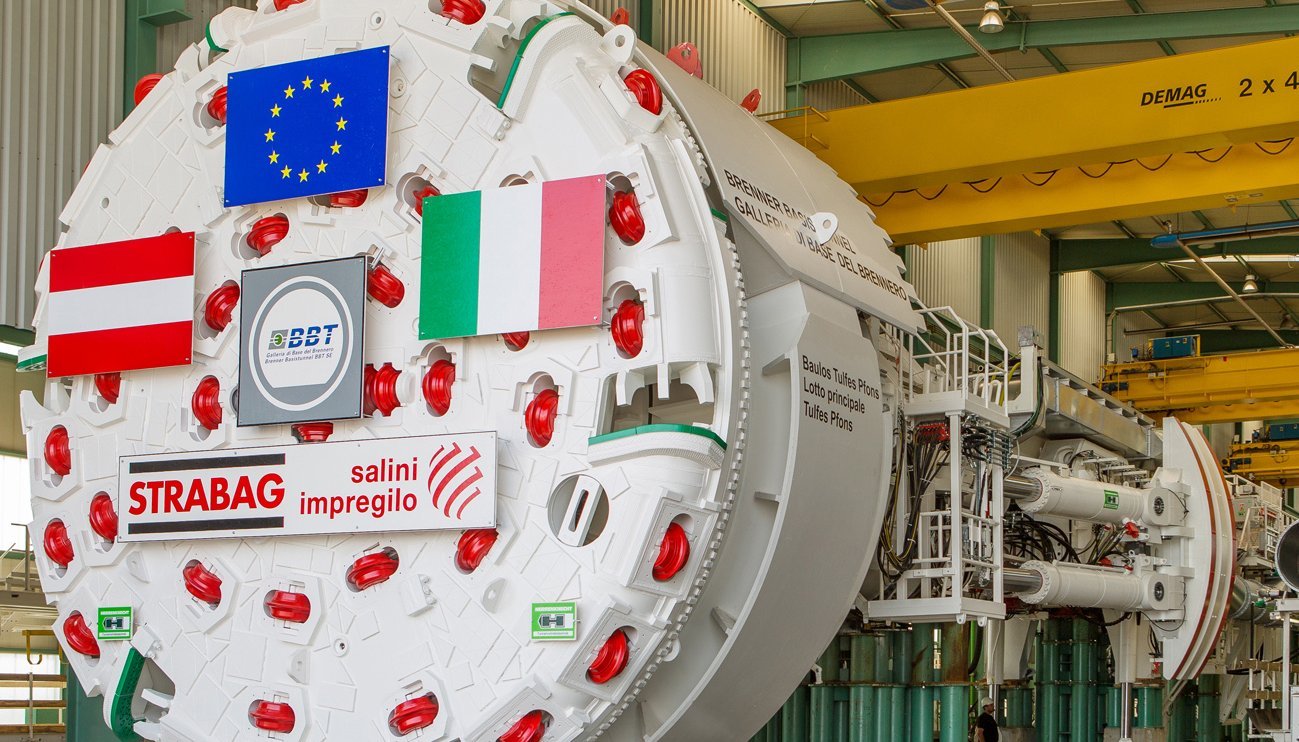
THE TBM IN FIGURES
Cutter head diametre
TBM total length
Driving power (5.710 PS)
TBM total weight
installed by TBM Virginia to form the inner lining
BREAKTHROUGH IN THE EXPLORATORY TUNNEL
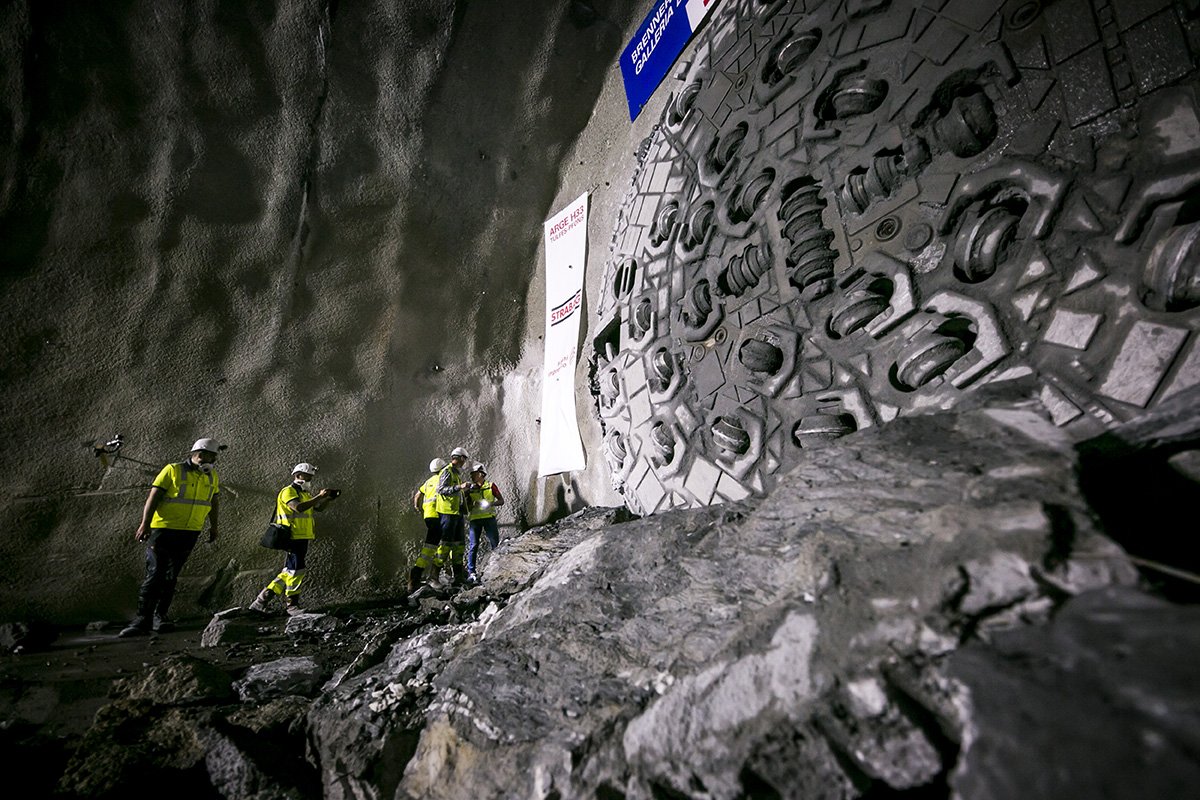
At 08:27 a.m., the TBM known as ‘Günther’, advancing from the north, broke through the final rock face towards the south. The breakthrough into the Pfons–Brenner construction lot was achieved with a deviation of just 106 millimetres in width and 14 millimetres in height.
The breakthrough established the connection between the two construction lots, Tulfes-Pfons and Pfons-Brenner, within the municipality of Schmirn.
Previously, a 1.7-kilometre section of the tunnel was excavated northwards from the Wipptal Valley using the drill-and-blast method to meet the TBM advancing from the opposite direction.
GEOLOGY
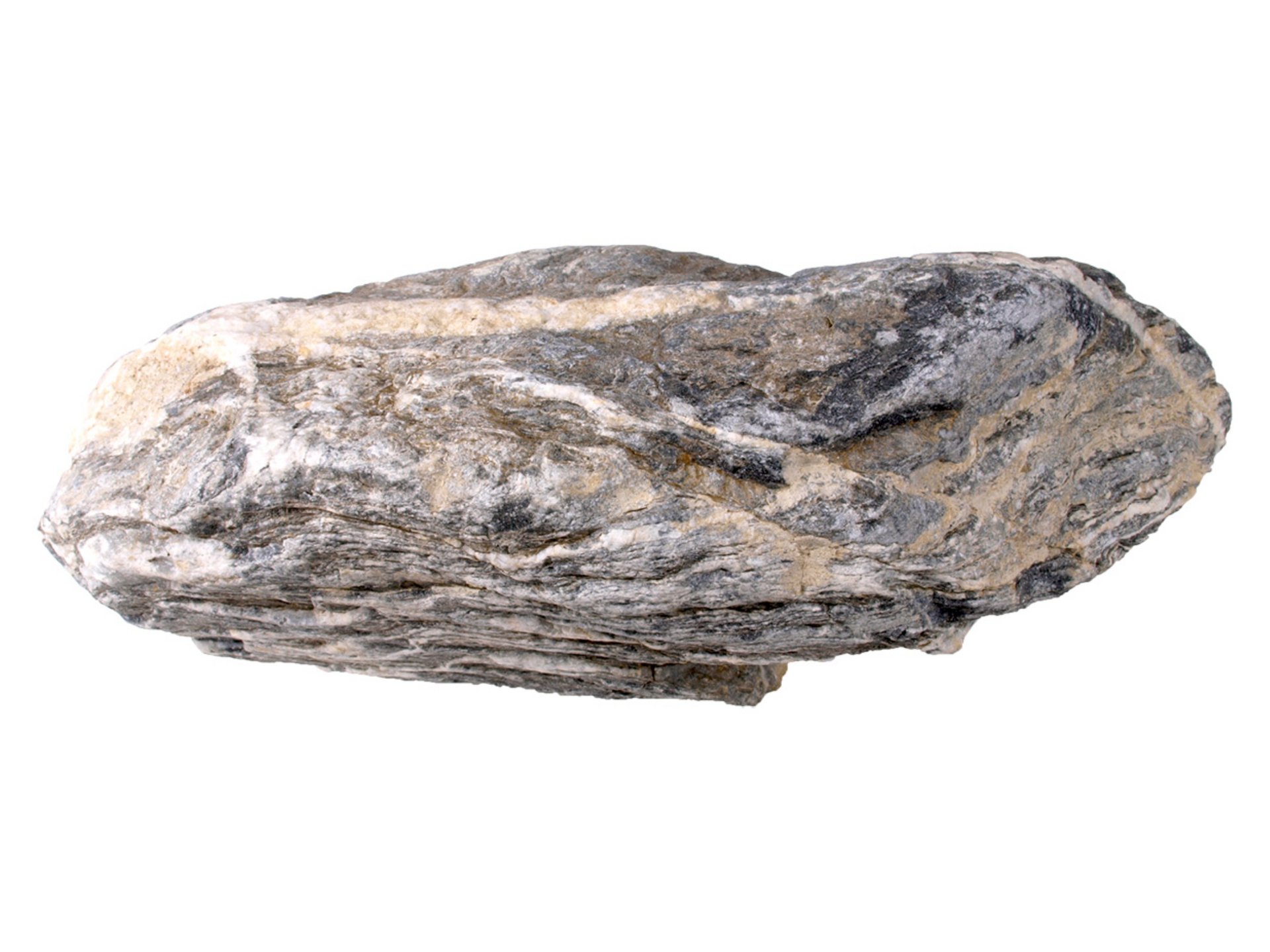
Bündner schists: Heavily schistose, these rocks are mainly made up of quartz, mica and calcite. The source material was deposited on the ocean floor during the Mesozoic era. During the formation of the Alps, these rocks were transformed into schist. The Mesozoic Era (also known as the “Reptilian Age”) is a geological era that began approximately 252 million years ago and ended around 66 million years ago. Mountain building, or orogeny, refers to the formation of mountain ranges through the deformation of rock masses over geological timescales.
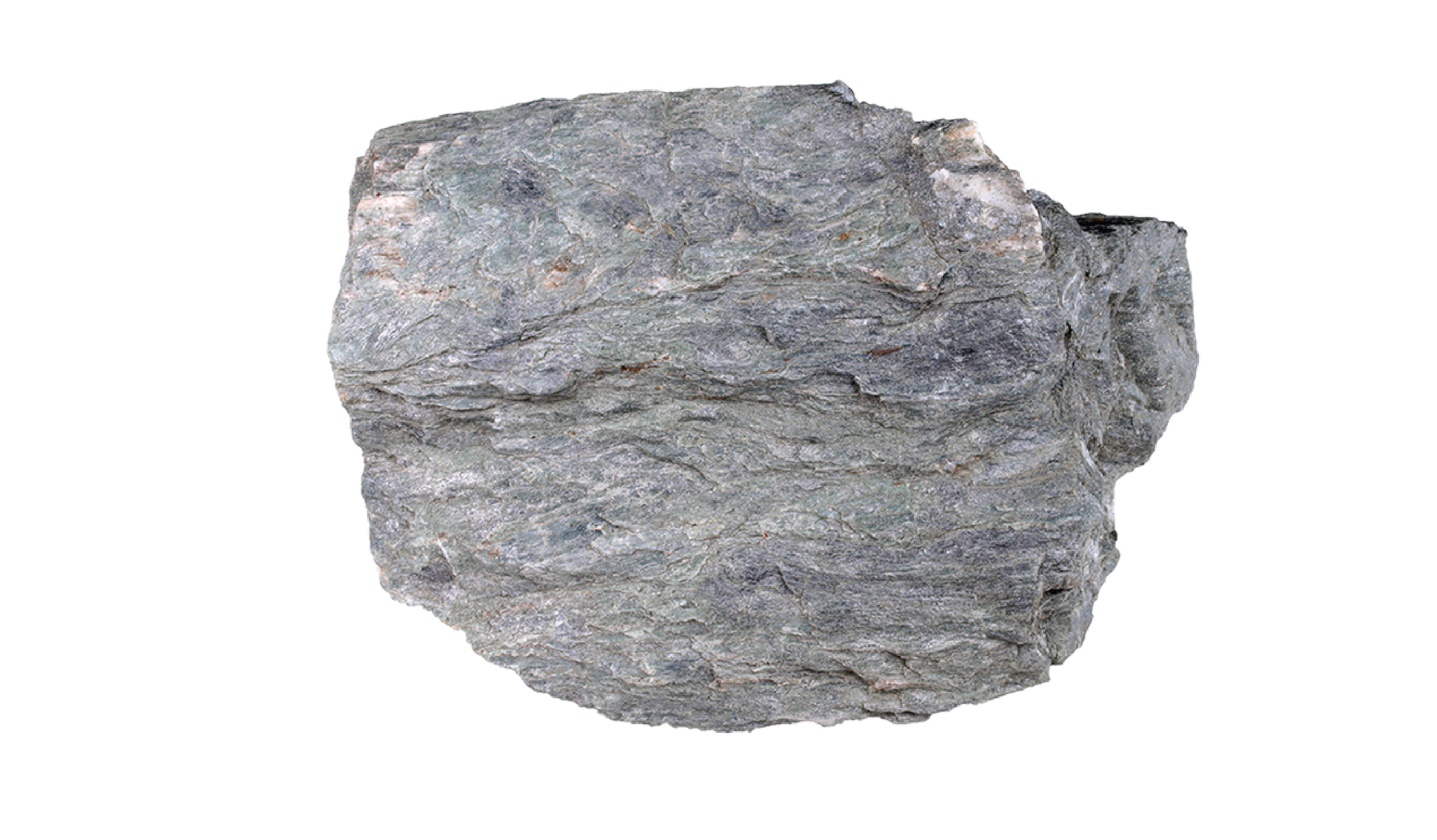
Quarzphyllite: A fine-grained, strongly foliated rock consisting mainly of quartz and mica. The original rocks were deposited during the Palaeozoic Era and were later transformed into phyllites under increased pressure and temperature during subsequent mountain-building processes. The Palaeozoic (also known as the Paleozoic Era or the “Age of Ancient Life”) spans the geological period from approximately 538.8 to around 251.9 million years ago.
DISMANTLING
After approximately 57 months of tunnelling in the Tulfes-Pfons exploratory tunnel and the simultaneous installation of 9,780 base segments, which form the tunnel floor, TBM Günther was dismantled directly on site

DISTINTIVE FEATURES OF TBM GÜNTHER
A small exception in a major project: Traditionally, every TBM is given a female name. However, this TBM, named ‘Günther’, was named after the then Governor of Tyrol, Günther Platter. As is well known, exceptions prove the rule.
The use of this open gripper tunnel boring machine made it possible to accurately identify the geological conditions and, consequently, the fault zones. This significantly improved the accuracy of geological forecasts for the main tunnels along this section.
Installation of the rail-bed
Unlike the other tunnel boring machines used in the construction of the BBT, which installed the entire inner lining of the tunnel along as they excavated, TBM Günther only installed precast concrete elements in the base slab, known as ‘base segments’. Once laid in sequence, these elements formed the foundation for the future trackbed following mechanical tunnel excavation. The base segments were transported directly to the tunnel boring machine by so-called Multiservice Vehicles (MSVs) – innovative, wheeled supply vehicles.
A world record
In May 2017, the gripper TBM excavated 61.04 metres in 24 hours through quartz phyllite rock, a world first. The average rate of advance was 11 metres per day.