BUILDING THE FUTURE WHILE RESPECTING THE ENVIRONMENT: INTERVIEW WITH MONIKA SOCK AND UGO BACCHIEGA
Thanks to the Brenner Base Tunnel, thousands of tonnes of freight will be shifted from road to rail, while new opportunities for education and employment across the Alps will open up for many. Yet the BBT project is already sustainable today. We discussed this with Ugo Bacchiega and Monika Sock, members of our Environmental Engineering team.
Monika, let’s start on the northern side. Your department is responsible for water treatment plants and ecological compensation measures for watercourses. What has been implemented so far in Austria, and how effective have these measures been?
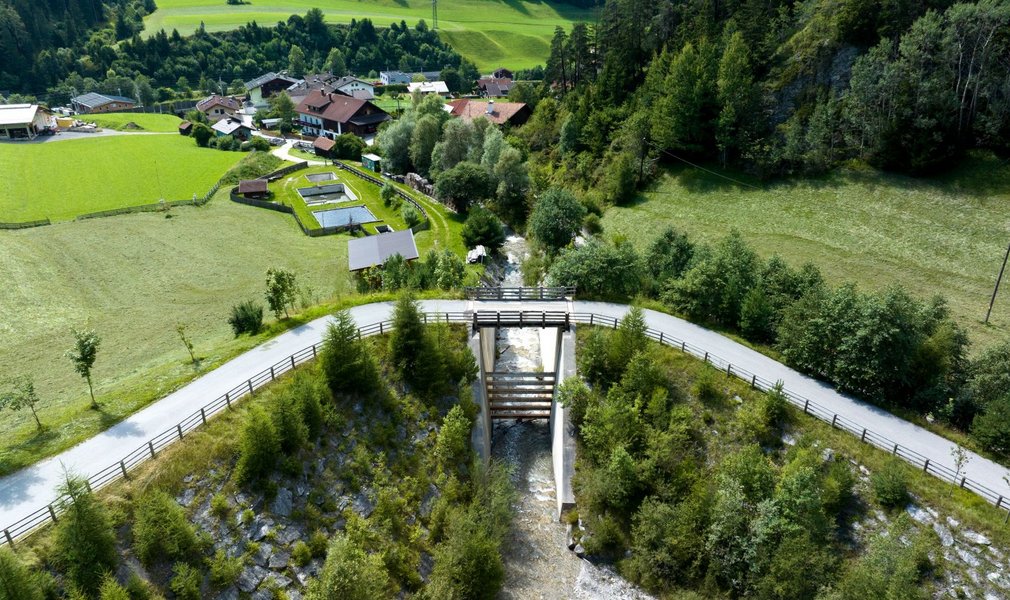
Water treatment plants are in operation at every BBT construction site and are managed by a dedicated water protection officer. All construction site water is collected and treated in these facilities and, following thorough monitoring, discharged into the receiving water bodies. As a precaution, all plants are equipped with additional emergency basins capable of handling extra water volumes when necessary, for example in the event of unexpected water inflows.
All treatment processes are documented, and the monitored data are transmitted digitally. This ensures compliance with environmental regulations and the protection of the ecosystem.
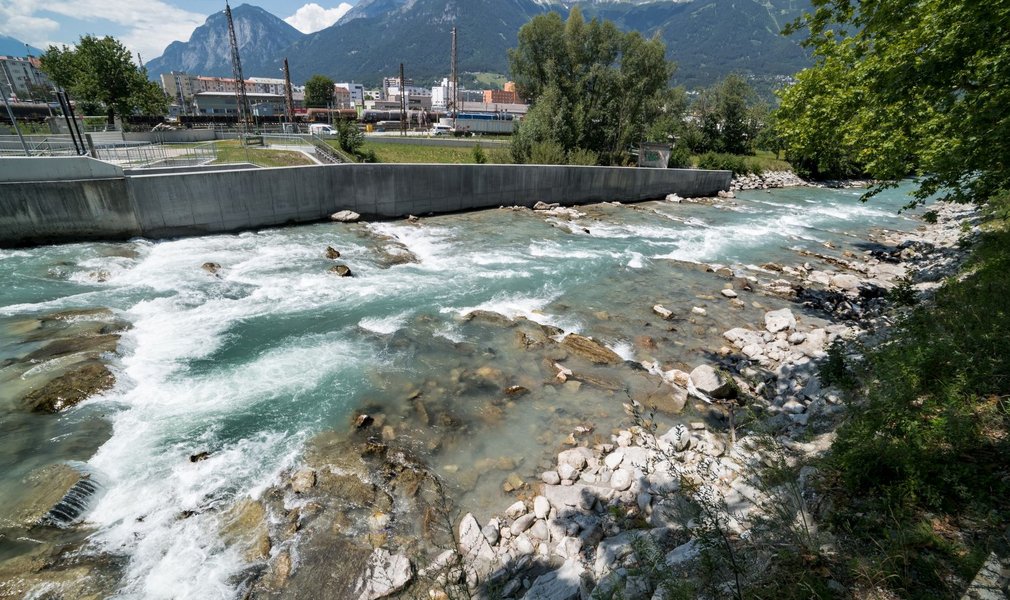
Of the six ecological compensation measures planned for watercourses, five have already been completed. In the municipality of Innsbruck, along the Sill river, the Tivoli weir has been modified to enable fish passage, while the “Aga” weir has been replaced by a 250-metre-long bypass channel, allowing fish migration. For the first time in several hundred years, fish can now migrate again from the Inn River into the Sill Gorge, reaching the mouth of the Ruetz stream.
These migrations are essential for the life cycle of many fish species and contribute to preserving biodiversity in our waters.
Let’s move to Italy. Ugo, one of the key areas is the Isarco river underpass: what renaturation measures have been implemented in such a sensitive area?
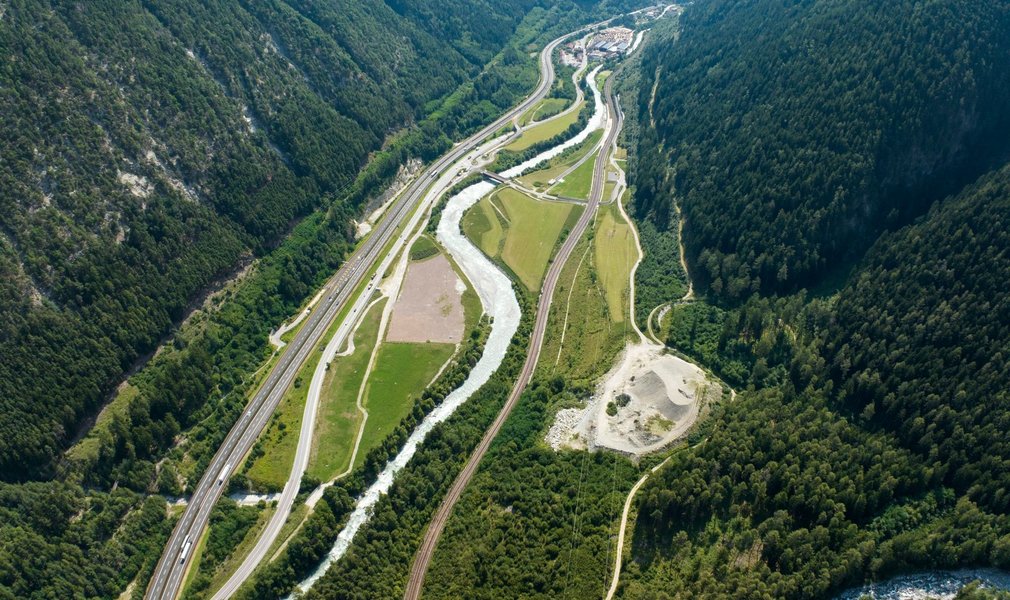
The renaturation project aimed to recreate an environment as close as possible to the original one, supporting ecosystem recovery and the integration of local species. To make the area more natural and attractive to wildlife, elements such as small wooded areas, piles of wood and stones were introduced.
Along the Isarco river, construction-affected areas have been reforested with typical riparian vegetation, ensuring continuity with nearby forests and natural areas. The slopes of new roads have also been planted with context-appropriate shrubs to better integrate them into the landscape. Interventions along the river focused on creating rich and diverse vegetation belts.
Agricultural areas have been restored and returned to their original use, except for some zones near permanent structures. On slopes, the development of mixed forests with varied structure has been encouraged, mainly consisting of spruce and silver fir, alongside broadleaf species.
For the Isarco river underpass, the project included new plantings based on models reflecting local vegetation, particularly forest types. A total of sixteen vegetation models were used, differing in species composition and spatial arrangement, with the aim of creating a diverse landscape and improving ecological continuity, something particularly vital along the river.
The main types of intervention include reforestation, shrubs, grasslands, bushes, small woodlands and agricultural areas. The species used vary according to the characteristics of each zone.
Monika, you are also responsible for relations with local residents: how is the relationship with communities along the project area built?
Since the early years of the BBT project—over 20 years ago—regular information afternoons and evenings have been organised in every municipality involved. Topics discussed have ranged, and still range, from the selection of disposal sites to procedures for property condition assessments.
Depending on the topic, residents are invited in a targeted way, which also leads to smaller events that allow for direct, personal interaction—for example, dedicated open days for local communities held in all affected municipalities.
Until the completion of the “Tunnel World” in Steinach am Brenner, we also operated an information centre at Innsbruck station, where I was present every Monday afternoon. Over the past 22 years, my planning activities have frequently taken me into the project area, allowing me to get to know many residents directly on site.
Over time, this has resulted in hundreds of contacts, which continue to grow. It is not always easy to address concerns and complaints in a way that satisfies everyone, but my colleagues and I are highly committed, and this effort is recognised and appreciated by the majority of residents.
And what about the Italian side? What have been the main compensation measures implemented in the territory?
Compensation measures are designed to offset impacts that cannot be avoided in other ways. For this reason, a comprehensive programme of interventions has been defined across the entire project area, aimed at compensating both temporary impacts during construction and permanent ones, such as land occupation for portals and access roads.
The distribution of these measures reflects a balance between local needs and environmental compensation requirements.
The main measures on the Italian side include:
• restoration and renaturation of watercourses within the project area;
• recovery of ecologically valuable structures (dry-stone walls, biotopes, alpine lakes);
• construction of educational trails;
• improvement of water distribution infrastructure (aqueducts, irrigation reservoirs);
• additional ecological compensation areas (both qualitative and quantitative criteria);
• noise mitigation and functional measures along the existing railway (noise barriers and railway undergrounding);
• ecological measures around visible structures;
• projects for parks, biotopes and protected areas;
• development of landscape programmes;
• interventions in urban areas near construction sites, such as the creation of recycling islands for separate waste collection, energy-efficient public lighting upgrades, improvements to water networks, road infrastructure enhancements, and the construction of a biomass plant for district heating.
In conclusion, if we were to sum it up: what is the real impact of the BBT on the territories it crosses, today and in the future?
The Brenner Base Tunnel is part of the European Union’s objectives in transport and environmental policy and is one of the priority projects in the Alpine region. Its main environmental benefits include a reduction in road traffic, noise and pollutant emissions, with positive effects on CO₂ emissions and the climate.
Environmental management is a key element in delivering a project of this scale, particularly in ensuring the sustainability of construction works. Thorough analysis, sound planning, careful design, competent execution and cooperation among all stakeholders—clients, authorities and contractors—make it possible to establish a virtuous process.
This approach enables the project to achieve its objectives while contributing to the sustainable development of the Alpine region and to the improvement of the European infrastructure network, of which the Brenner Base Tunnel is a central element.